This post contains affiliate links. As an Amazon Associate I earn from qualifying purchases, at no extra cost to you.
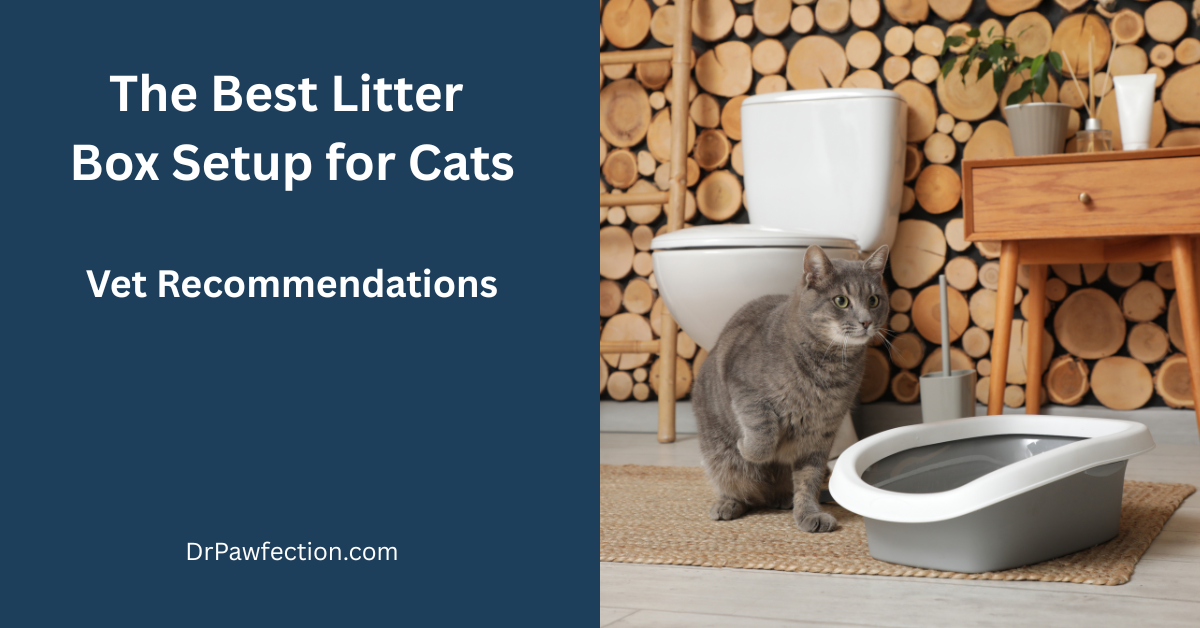
The best litter box setup for cats makes a bigger difference than most owners realise. Litter box problems are the number one behavioural complaint I hear in practice — and the vast majority come down to setup rather than the cat. Get it right, and most cats will use the box reliably without any further intervention.
Tray Size: Bigger Than You Think
Most commercially available litter trays are too small. A cat should be able to walk in, turn around completely, and adopt a comfortable crouching position without their body touching any of the sides. As a rough guide, the tray should be at least one and a half times the length of your cat from nose to tail base.
Undersize trays are one of the most common causes of litter box avoidance that I see in practice, particularly for larger breeds and older cats. Storage containers or underbed boxes from hardware stores often make excellent oversized trays at a lower price than pet-specific products. If you prefer a purpose-built option, the Arm & Hammer Large Sifting Litter Box is a popular vet-friendly choice.
Covered vs Open Trays
While covered trays are popular with owners — because they contain mess and odour — the evidence suggests most cats prefer open trays. Covered trays trap ammonia odours inside, which is unpleasant for a cat’s sensitive nose. They also restrict a cat’s ability to monitor their surroundings while in a vulnerable position.
If you prefer a covered tray, ensure it is cleaned more frequently, and monitor whether your cat seems to hesitate before entering or exit quickly — both are signs of aversion.
Low Entry Points for Older Cats
For cats over 8-10 years old, or any cat with joint problems, the height of the entry point matters. A tray with a high front wall requires a cat to step up significantly, which can be uncomfortable for arthritic cats and may cause them to avoid the box. Low-entry trays — or trays with one side cut down — are a simple solution that makes a meaningful difference. The Ying Tutu Extra Large Low Entry Litter Box is specifically designed for older or arthritic cats.
Litter Type: What Cats Actually Prefer
Research and clinical experience both consistently point to the same preference: most cats prefer fine-grained, unscented, clumping litter. This mimics the texture of soft soil or sand, which is what cats would naturally choose to eliminate in.
Heavily scented litters are designed to appeal to owners, not cats. The strong fragrance is often aversive to cats and may cause box avoidance. Similarly, very coarse or large-pellet litters are frequently rejected in preference tests.
If you need to change litter types, do so gradually — mix the new litter in increasing proportions over one to two weeks. An abrupt change in litter type is a common trigger for litter box avoidance.
The Indoor Pet Initiative from Ohio State University has further guidance on environmental enrichment for cats.
Litter Depth
Most cats prefer a litter depth of approximately 5-7cm (2-3 inches). This provides enough depth for digging and covering behaviour without being so deep that it feels unstable underfoot.
Litter Mats
A litter mat placed in front of the tray is a practical addition that catches litter tracked out on your cat’s paws. Soft-textured mats that allow litter to fall through are more effective than flat mats, which simply redistribute the litter across the floor. The Petinstinct Extra Large Litter Mat is a well-reviewed option that traps litter effectively.
For accidents outside the tray, always use an enzymatic cleaner — standard household cleaners don’t neutralise cat urine odour and cats will return to the same spot.
Number and Placement
The best litter box setup for cats follows the guideline of one tray per cat plus one extra, distributed across different areas of the home. Trays should be in quiet spots with at least two exit routes, away from food bowls and noisy appliances.
The Complete Vet-Recommended Litter Box Setup for Cats
- Large, open tray — at least 1.5x the cat’s body length
- Low entry point for older cats
- Fine-grained, unscented clumping litter at 5-7cm depth
- Scooped at least once daily
- Full litter change weekly, tray washed with mild unscented detergent
- One tray per cat plus one extra
- Trays in separate quiet locations, not clustered together
- Litter mat in front of each tray

Dr Jason Arlaud BVSc, B.Sc., M.Rep.Sci is a practising veterinarian with over 20 years of clinical experience treating dogs, cats, and small animals. He created Dr Pawfection to give pet owners access to reliable, vet-quality health advice they can use at home to keep their pets healthier for longer.
Leave a Reply to What Type of Cat Litter Do Vets Recommend? – Dr Pawfection Cancel reply