This post contains affiliate links. As an Amazon Associate I earn from qualifying purchases, at no extra cost to you.
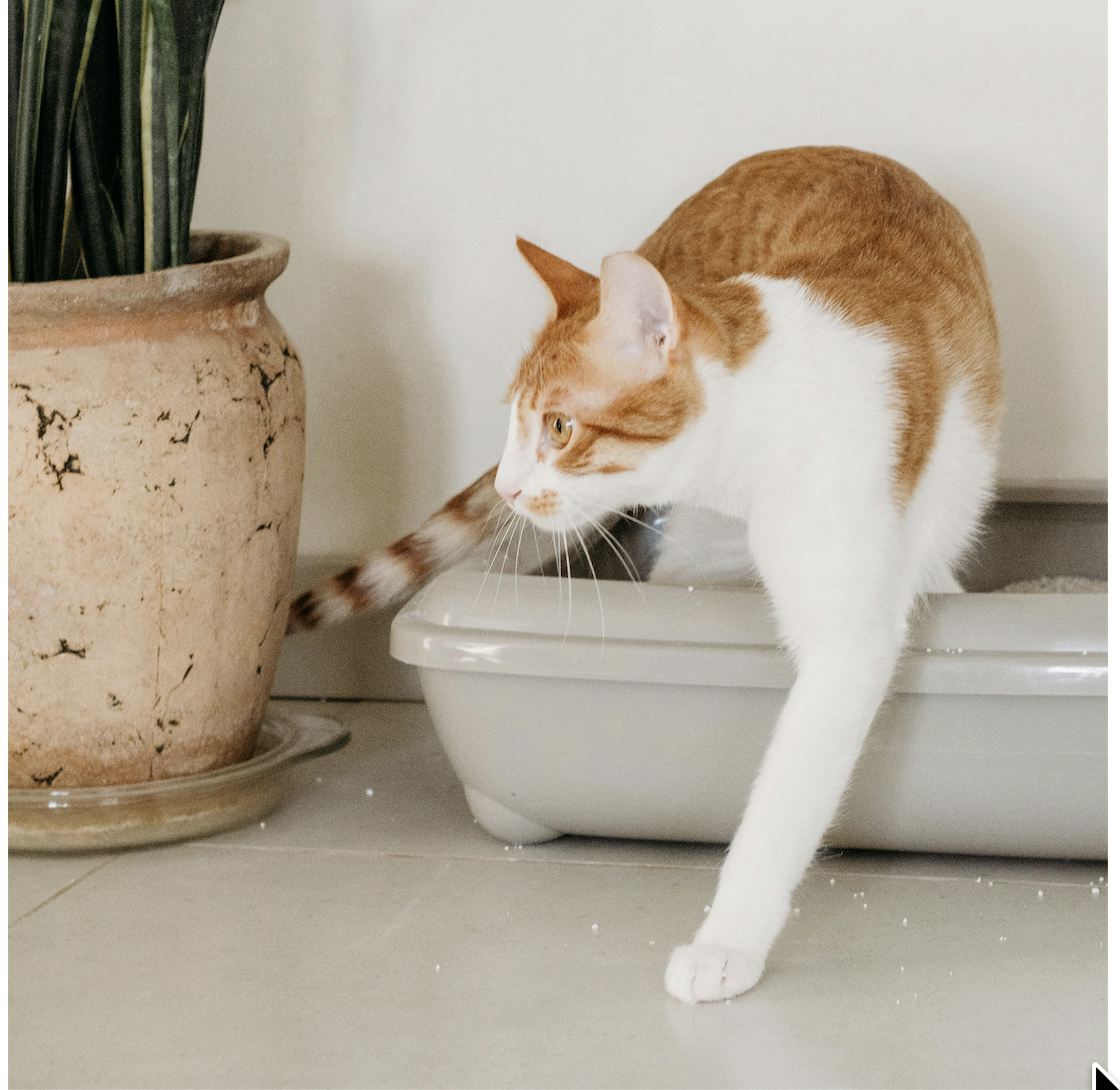
Cat peeing outside the litter box? You’re not alone — it’s one of the most common concerns I hear from cat owners in my clinic, and one of the most misunderstood.
The good news is that in most cases, there is a clear reason, and it can be resolved.
When a cat is peeing outside the litter box, acting quickly can prevent the behaviour from becoming a long-term habit.
📺 Watch: I cover this in detail in the video below.
Always Rule Out a Medical Cause First
The first thing I tell every cat owner when this problem comes up is this: do not assume it’s behavioural. A sudden change in litter box use is often the first sign of an underlying medical problem.
Conditions that commonly cause inappropriate urination include:
- Feline lower urinary tract disease (FLUTD)
- Urinary tract infections (more common in older cats)
- Bladder stones or crystals
- Kidney disease
- Diabetes
- Arthritis (which makes getting in and out of the box painful)
- Hyperthyroidism
If your cat has been using the litter box reliably and suddenly stops, a vet examination and urinalysis is the right first step. This is especially urgent in male cats — a urinary blockage can become life-threatening within 24 to 48 hours.
⚠️ If your male cat is straining to urinate and producing little or no urine, treat this as an emergency and see a vet immediately.
Behavioural Causes: Why Your Cat Is Peeing Outside the Litter Box
Once medical causes have been ruled out, the problem is usually behavioural. The most common behavioural cause is litter box aversion — your cat has decided, for one reason or another, that the litter box is not a place they want to use.
Common reasons for litter box aversion include:
- The box is not cleaned frequently enough — cats are fastidious and will avoid a dirty box
- The box is too small — your cat should be able to turn around completely without touching the sides
- A covered box is trapping odours inside
- The litter type has been changed
- The box is in a location that feels unsafe or exposed
- A negative experience occurred in or near the box (a loud noise, being startled)
Location and Number of Litter Boxes
The veterinary guideline is one litter tray per cat, plus one extra. This means a single-cat household should have two trays, a two-cat household should have three, and so on. This single change resolves a surprising number of inappropriate urination cases.
Location matters too. Litter boxes should be placed in quiet areas with more than one exit route — cats don’t like to feel trapped. Avoid placing them near food and water bowls, beside noisy appliances like washing machines, or in high-traffic areas.
Is It Marking, or Is It Urination?
It’s important to distinguish between inappropriate urination and urine marking, as the causes and solutions are different. Inappropriate urination typically involves larger volumes of urine deposited on horizontal surfaces. Marking (spraying) typically involves small amounts of urine on vertical surfaces — walls, door frames, furniture legs.
If your cat is spraying vertical surfaces, the cause is usually territorial or anxiety-related rather than a litter box problem. See my separate article on cat urine marking for more detail on this.
What to Do If Your Cat Is Peeing Outside the Litter Box
- Book a vet appointment to rule out medical causes
- Review your litter box setup — number, size, location, and cleanliness
- Clean soiled areas thoroughly with an enzymatic cleaner. Standard household cleaners do not neutralise cat urine odour, and cats will return to areas that still smell like urine
- Avoid punishing your cat — it does not work and will increase anxiety, making the problem worse
- If the problem persists after addressing the above, ask your vet for a referral to a veterinary behaviourist
The Bottom Line
A cat peeing outside the litter box is almost always communicating something — either that they are unwell, or that something about their environment needs to change

Dr Jason Arlaud BVSc, B.Sc., M.Rep.Sci is a practising veterinarian with over 20 years of clinical experience treating dogs, cats, and small animals. He created Dr Pawfection to give pet owners access to reliable, vet-quality health advice they can use at home to keep their pets healthier for longer.
Leave a Reply