This post contains affiliate links. As an Amazon Associate I earn from qualifying purchases, at no extra cost to you.
If a cat stopped using litter box habits suddenly, it’s almost always trying to communicate something — either a medical problem or an issue with their environment. But it’s important to approach this methodically rather than assuming it’s a behaviour problem. In my clinical experience, there is almost always a clear reason, and in most cases it can be fixed.
A cat stopped using litter box is almost always trying to communicate something — either a medical problem or an issue with their environment.
Step One: Rule Out Medical Causes When Your Cat Stopped Using Litter Box
I cannot stress this enough: a sudden change in litter box behaviour is a medical concern until proven otherwise. Before assuming the problem is behavioural, your cat needs a vet examination.
Medical conditions that can cause a cat to stop using the litter box include urinary tract infections, bladder stones or crystals, feline idiopathic cystitis (FIC), kidney disease, diabetes, constipation, and arthritis. An arthritic cat may stop using the box not because of any aversion but simply because getting in and out is painful.
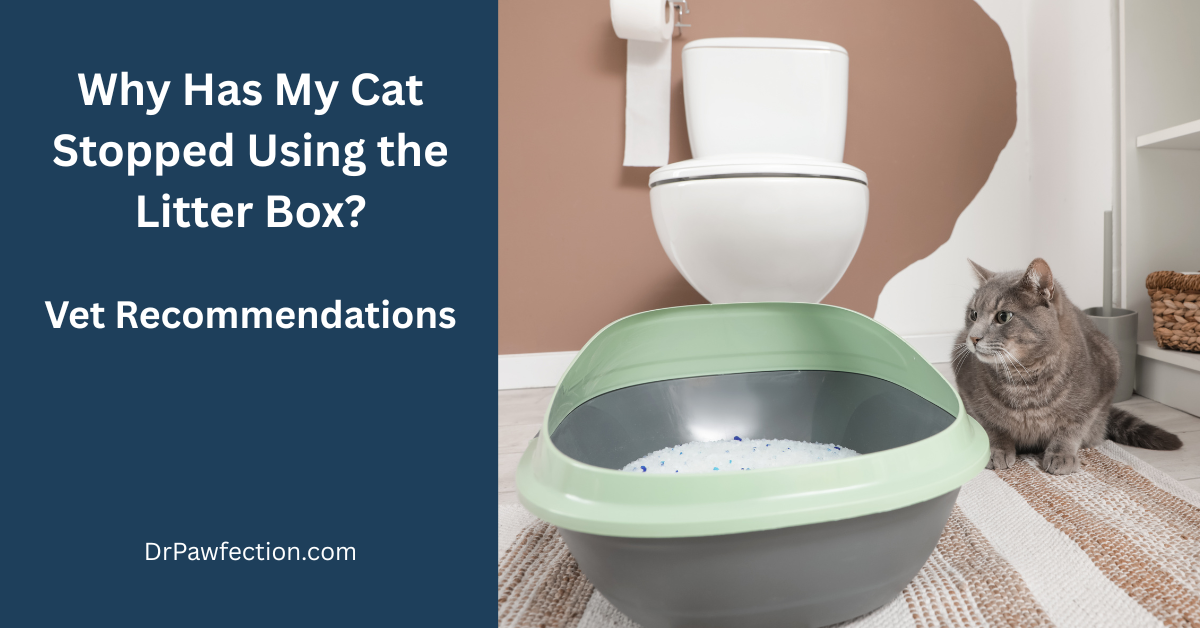
The Box Itself May Be the Problem
If your vet has cleared your cat medically, the next area to examine is the litter box setup itself. Ask yourself the following questions:
- Is the tray large enough for your cat to turn around comfortably?
- Is the entry point low enough, particularly if your cat is older?
- Is the tray covered? Many cats dislike covered trays
- How recently has the litter been changed and the tray cleaned?
- Has the litter brand or type been changed recently?
- Has the location of the tray changed?
- Has anything changed near the tray — a new appliance, increased noise, another pet?
Pain Association With the Litter Box
One of the more challenging situations is when a cat has had a painful experience while in the litter box — most commonly due to a urinary condition — and has come to associate the box itself with that discomfort. Even after the medical issue is treated, the cat may continue to avoid the box.
In these cases, introducing a new tray with different litter in a different location can help the cat dissociate the new setup from the previous painful experience.
Stress and Anxiety
Significant changes to a cat’s environment or routine can disrupt litter box use. Common triggers include a new pet or person in the household, moving house, building work or renovations, changes in the owner’s schedule, or the presence of neighbourhood cats visible through windows.
In these situations, the litter box changes are usually one part of a broader pattern of stress-related behaviour changes. Addressing the underlying source of anxiety — and in some cases, using pheromone therapy or veterinary-prescribed anti-anxiety medication — is the appropriate response.
Cleaning Soiled Areas
Cats are strongly attracted to eliminate in areas that smell of urine, even in trace amounts undetectable to humans. Cleaning soiled areas with standard household cleaners is not sufficient — the ammonia compounds in cat urine are not neutralised by most cleaning products and can actually intensify the scent marker.
An enzymatic cleaner specifically designed for pet urine is necessary to properly neutralise the odour and break the cycle of return visits to the same spot.
Summary: A Methodical Approach
- See your vet to rule out medical causes
- Review and optimise the litter box setup
- Ensure you have the right number of trays (N+1 rule)
- Clean all soiled areas with an enzymatic cleaner
- Consider environmental stressors if the above doesn’t resolve the issue
- Discuss pheromone therapy or medication with your vet if anxiety is the underlying cause

Dr Jason Arlaud BVSc, B.Sc., M.Rep.Sci is a practising veterinarian with over 20 years of clinical experience treating dogs, cats, and small animals. He created Dr Pawfection to give pet owners access to reliable, vet-quality health advice they can use at home to keep their pets healthier for longer.
Leave a Reply to What Type of Cat Litter Do Vets Recommend? – Dr Pawfection Cancel reply