This post contains affiliate links. As an Amazon Associate I earn from qualifying purchases, at no extra cost to you.
One of the most common mistakes I see cat owners make is treating cat spraying vs inappropriate urination as the same problem. They look similar on the surface, but these two conditions have completely different causes — and require completely different solutions.
What Is Inappropriate Urination?
Inappropriate urination refers to a cat urinating outside the litter box in order to empty their bladder. The key characteristics are:
- The cat squats normally to urinate
- A relatively large volume of urine is deposited
- Urine is usually found on horizontal surfaces (floors, rugs, beds, laundry)
- The cat may partially or completely stop using the litter box
- The cat may still defecate in the litter box normally
Inappropriate urination is almost always driven by either a medical problem or a litter box issue — the size, cleanliness, location, or litter type.
What Is Urine Marking (Spraying)?
Urine marking is a deliberate communication behaviour. When a cat marks, they are depositing scent as a message to other cats — or as a response to stress or anxiety. The key characteristics are:
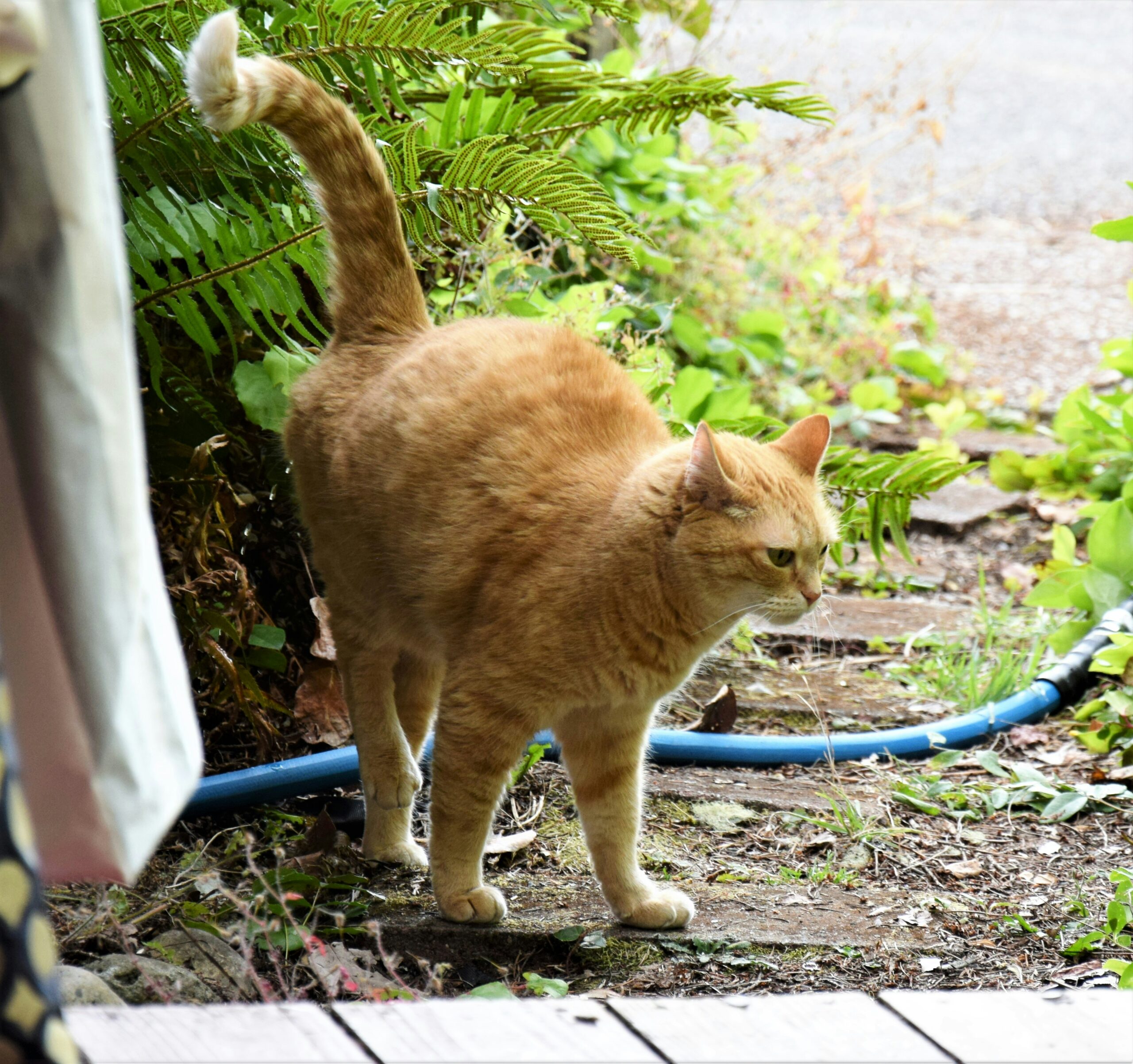
- The cat typically stands with tail raised and quivering
- Small amounts of urine are deposited
- Urine is most commonly found on vertical surfaces — walls, door frames, furniture legs, curtains
- The cat usually continues to use the litter box normally for toileting
- Marked locations tend to be socially significant: near entry points, windows, or the belongings of a particular person
“Why Cat Spraying vs Inappropriate Urination Requires Different Treatment”
Because the treatment is completely different. If your cat is spraying due to territorial anxiety and you respond by cleaning the litter box, you won’t resolve anything. Equally, if your cat has a urinary tract infection and you try to address it with stress-reduction strategies alone, you’re missing the underlying cause.
Identifying which problem you’re dealing with is the essential first step.
What Causes Urine Marking?
Marking is primarily a territorial and stress-related behaviour. Common triggers include:
- A new cat or animal in the household
- Neighbourhood cats visible through windows or doors or they are heard outside.
- Changes in the household — new people, a new baby, renovation, moving house
- A breakdown in the relationship between cats in a multi-cat household
- The owner returning from a trip
- Unneutered status — approximately 90% of intact males will spray; neutering resolves this in around 90% of cases if done before the behaviour becomes established
Treatment: Spraying vs Inappropriate Urination
For inappropriate urination, the priority is a vet examination to rule out medical causes, followed by a review of the litter box setup.
For urine marking, treatment typically involves identifying and removing stressors, neutering if not already done, thorough cleaning of marked areas with an enzymatic cleaner, and in persistent cases, pheromone therapy (such as Feliway) or anti-anxiety medication prescribed by your vet.
When It’s Both
When it comes to cat spraying vs inappropriate urination, it’s worth noting that some cats exhibit both behaviours simultaneously, and a medical problem can sometimes trigger a marking response. A cat with a urinary tract infection that experiences pain in the litter box may develop an aversion to the box and begin urinating elsewhere — and may then develop a preference for those new locations even after the medical issue is resolved.
This is why early intervention matters. The longer an inappropriate elimination pattern is established, the harder it becomes to change.
If you’re unsure which behaviour your cat is displaying, or if the problem has been going on for more than a few days, a consultation with your vet is always the best first step.

Dr Jason Arlaud BVSc, B.Sc., M.Rep.Sci is a practising veterinarian with over 20 years of clinical experience treating dogs, cats, and small animals. He created Dr Pawfection to give pet owners access to reliable, vet-quality health advice they can use at home to keep their pets healthier for longer.
Leave a Reply to How Many Litter Boxes Does a Cat Need? A Vet Explains – Dr Pawfection Cancel reply