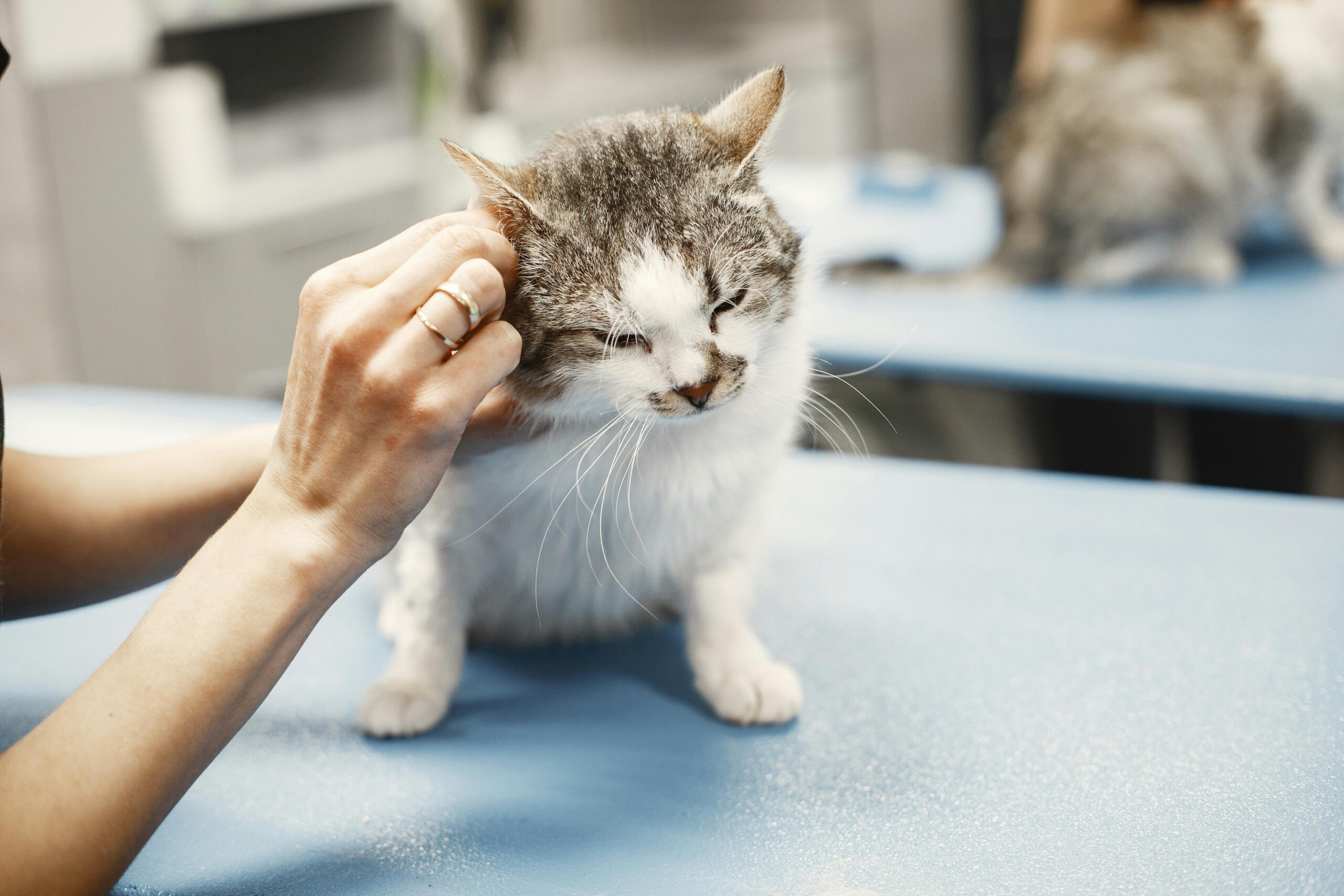
Hyperthyroidism in cats is one of the most common hormonal conditions in older felines — and if your cat has been losing weight despite eating more than usual, it could be the reason. The good news is that with early detection and the right treatment, most cats can be managed well and continue to live comfortably.
In this guide, I’ll walk you through what feline hyperthyroidism actually is, how it affects your cat’s body, how vets diagnose it, the treatment options available, and a simple at-home test you can do to monitor your cat’s progress.
This article is based on our YouTube video
What Is Feline Hyperthyroidism?
Feline hyperthyroidism is a condition that results in an abnormally high metabolic rate, caused by sustained high levels of thyroid hormones circulating in your cat’s body.
In the vast majority of hyperthyroid cats, benign tumors known as adenomas in the thyroid tissue — in one or both lobes of the thyroid gland — become independent of normal hormonal control. These adenomas produce excessive levels of thyroid hormones T4 and T3.
In a healthy cat, T4 and T3 production is carefully regulated by the brain via TSH (thyroid stimulating hormone). When an adenoma develops, that regulatory feedback loop breaks down, and the thyroid gland produces hormones unchecked.
Think of it like revving a car engine too high, all the time. A lot more fuel gets burned — and that’s essentially what happens inside your cat’s body.
Only around 1–2% of cats with hyperthyroidism have a malignant tumor (thyroid adenocarcinoma). The vast majority are benign adenomas.
How Hyperthyroidism Affects Your Cat’s Body
Hyperthyroidism doesn’t just affect the thyroid gland — the excessive hormones impact six major body systems due to that sustained high metabolic rate.
1. Muscle and Body Condition (Musculoskeletal System)
Hyperthyroidism causes cachexia — progressive muscle wasting. Because your cat’s metabolic rate is running so high, the food they’re eating can’t supply all their energy needs. The body starts looking for spare fuel, and it will prioritize breaking down muscle first. If there’s any fat reserve, that will be broken down too.
This is why one of the earliest signs owners notice is their cat looking thinner, despite eating well or even eating more than usual.
2. Heart and Blood Pressure (Cardiovascular System)
The heart is significantly affected by hyperthyroidism. The condition causes myocardial hypertrophy — thickening of the heart muscle — which can actually reduce the size of the heart chambers and make the heart less efficient at pumping blood.
Hyperthyroidism also causes high blood pressure (hypertension). Some cats will develop a heart murmur, and in some cases, a blood clot can form.
In rare but serious cases, a blood clot can travel from the heart down the aorta to where it branches into the arteries supplying the hind legs. If a clot lodges there — called a saddle thromboembolis — it can block blood supply to one or both back legs.
If this happens, it is an emergency. Your cat will be in severe pain. If you hold their front paws and then feel their back paws, you’ll notice the back feet are cold to the touch. Get your cat to a veterinary clinic or emergency hospital immediately.
3. Digestive System (Gastrointestinal System)
Hyperthyroidism reduces the transit time for food moving through the digestive tract. Food passes through faster than normal, which means there isn’t enough time for the gut to absorb nutrients properly or to absorb water from the stool.
This leads to cellular malnutrition and often diarrhea, because the gut simply can’t keep up with the speed at which food is passing through. The liver can also be damaged by hyperthyroidism in cats.
4. Kidneys (Renal System)
The kidneys are affected through the higher glomerular filtration rate (GFR) caused by elevated blood pressure. This is important because the high blood pressure can actually mask underlying kidney disease — the kidneys may appear to be functioning better than they truly are.
This is a critical consideration when it comes to treatment decisions, which I’ll discuss below.
The kidneys may also suffer hyperfiltration injury in some cases, and hyperthyroid cats often can’t concentrate their urine properly, leading to increased urination and thirst.
5. Nervous System and Behavior
Cats with hyperthyroidism may show irritability, restlessness, and sometimes aggression. Some cats have episodes of sudden hyperactivity — running around the house at full speed for no apparent reason. One of my own cats used to do exactly this at 11 o’clock at night — just get up from a resting position and sprint around the room several times.
Which Cats Are Affected?
Hyperthyroidism has a global distribution — no particular region, country, or area is affected more than any other. There is also no breed predisposition; all breeds appear to be equally at risk, and both male and female cats are affected equally.
The age range at diagnosis varies from 4 to 22 years, with the average age being around 13 years. However, it is extremely uncommon for a cat younger than 6 years of age to be diagnosed with hyperthyroidism.
Symptoms of Hyperthyroidism in Cats
What You’ll Notice at Home
These are the signs that cat owners typically observe first:
- Weight loss — often the most obvious and earliest sign
- Increased appetite (polyphagia) — eating more than usual, sometimes ravenously
- Vomiting
- Diarrhea
- Increased thirst (polydipsia) and increased urination
- Increased breathing rate (tachypnea)
- Hyperactivity — sudden bursts of energy, restlessness, or running around
What Your Vet Will Look For
During a physical examination, your veterinarian will check for:
- Enlarged thyroid gland — felt during palpation of the neck. In about 70% of cats, both thyroid lobes are enlarged
- Poor body condition — visible rib prominence, muscle wasting, protruding bones
- Heart murmur — detected with a stethoscope
- Increased heart rate (tachycardia) and possibly an abnormal rhythm called a gallop rhythm
- Unkempt, dull coat and thickened claws
What Causes Hyperthyroidism in Cats?
The honest answer is that no one knows definitively why feline hyperthyroidism occurs. However, some studies have suggested a possible link to certain canned food diets. The other significant risk factor is simply aging.
How Is Feline Hyperthyroidism Diagnosed?
Because hyperthyroidism can look similar to several other conditions — including liver disease, kidney disease, diabetes, and cancer — your veterinarian will need to run blood tests to confirm the diagnosis.
The key test is measuring the total T4 (thyroxine) level. In a hyperthyroid cat, this will typically be elevated — either in the upper range of normal or above the normal reference range.
Your vet may also check for:
- Liver enzyme increases — including ALT, ALP, and AST
- Elevated blood urea nitrogen (BUN) and creatinine — which may indicate kidney involvement
The blood sample can be processed in-house if your clinic has the equipment, or sent to an external laboratory.
Treatment Options for Feline Hyperthyroidism
There are four main treatment approaches for feline hyperthyroidism, and the right choice depends on your cat’s overall health, any concurrent conditions, and practical considerations like cost and lifestyle.
1. Oral Medication
The most common first-line treatment. Medications include carbimazole (used in some countries) or methimazole tablets. Methimazole is also available as a liquid and can be compounded into a transdermal gel that’s applied to the skin on the inner ear — a useful option for cats who are difficult to tablet.
For cats that won’t take treats, a soft-tip pill popper lets you place the tablet at the back of the throat quickly and safely.
Oral medication does not cure hyperthyroidism, but it controls the hormone levels effectively when given consistently.
2. Radioactive Iodine Therapy (I-131)
This is performed at specialized veterinary hospitals by veterinarians with specific training. It is considered the one treatment that may cure hyperthyroidism in cats, according to feline medicine specialists.
How it works: iodine is a key building block of thyroid hormone, so when radioactive iodine is administered, it specifically targets the thyroid gland and destroys the overactive tissue.
However, radioactive iodine therapy is usually not given immediately. Here’s why:
Because hyperthyroidism causes high blood pressure, it can actually improve kidney function in cats that have some degree of underlying kidney disease. Once you control the hyperthyroidism, the blood pressure normalizes — and kidney disease that was previously hidden may become apparent.
This is why most vets will start with oral medication first, monitor the response and kidney values over several weeks, and only proceed to radioactive iodine once they’re confident kidney function is stable. Once radioactive iodine is given, it cannot be reversed — unlike medication, which can be adjusted or reduced if kidney problems emerge.
3. Surgery (Thyroidectomy)
Surgery may be considered in some cases, particularly if a cat has an aggressive adenocarcinoma. However, for the vast majority of cats with benign adenomas, surgery is usually not performed. This is because adenomas tend to be diffuse — interwoven between normal thyroid tissue — rather than a single discrete tumor that can be cleanly removed.
Potential surgical complications include hypoparathyroidism (insufficient parathyroid hormone production), hypothyroidism (too little thyroid hormone, which can be managed with thyroid supplements), and laryngeal paralysis due to the proximity of critical nerves to the thyroid gland.
4. Dietary Management
There is a prescription diet very low in iodine — Hill’s y/d — that limits the amount of thyroid hormone the gland can produce. By restricting the key ingredient needed to make thyroid hormone, the diet effectively controls the condition.
This option may be suitable for cats where cost prohibits radioactive iodine therapy, or where adverse reactions to oral medication make it unsuitable. It does require the cat to eat only this food — no treats, no other brands, no hunting.
Hill’s y/d is the prescription iodine-restricted diet your vet may recommend — check with your vet before starting.
What Happens If Hyperthyroidism Isn’t Treated?
Left untreated, hyperthyroidism can lead to serious and potentially fatal complications:
- Congestive heart failure
- Kidney damage
- Vision loss — due to retinal detachment caused by high blood pressure
- Chronic diarrhea and vomiting
- Death
Early diagnosis and treatment are essential to give your cat the best possible outcome.
A Simple At-Home Test: Weigh Your Cat Regularly
Here’s a free, easy way to monitor your cat’s progress — whether they have hyperthyroidism, diabetes, kidney disease, or you just want to keep an eye on their general health.
Weigh your cat every 2 weeks to once a month.
The simplest method:
- Pick your cat up and step onto your bathroom scales together
- Note the combined weight
- Put your cat down and weigh yourself alone
- Subtract your weight from the combined weight
This avoids the challenge of getting your cat to stand still on a scale.
As owners, we often don’t realize how much weight our cats are losing because we see them every day and the loss happens gradually. Even as a veterinarian, I’ve been surprised when weighing my own cats to find the weight loss was more than I expected.
A dedicated pet scale makes it easier to track small weight changes accurately — look for one with a hold function that locks the reading even if your cat moves.
If your cat continues to lose weight despite treatment, go back to your vet to discuss adjusting the dose or exploring other treatment options.
5 Key Things to Monitor at Home
If your cat has been diagnosed with hyperthyroidism, keeping a record of these five things between vet visits will help your veterinarian fine-tune treatment and catch problems early:
- Weight — weigh every 2 weeks minimum
- Appetite and food consumed — note if they’re eating more or less, and how much
- Water intake — increased thirst can signal uncontrolled thyroid levels or kidney changes
- Vomiting frequency — record timing, frequency, and any triggers
- Stool consistency — note any diarrhea or changes in stool quality
Want a printable tracker to make this easy? Our Feline Hyperthyroidism Tracker was designed by a veterinarian specifically for monitoring cats on hyperthyroid treatment. It gives you a structured way to record all five key indicators so you have useful data to share with your vet at every check-up.
Frequently Asked Questions
How long can a cat live with hyperthyroidism?
With proper treatment, many cats with hyperthyroidism go on to live for several more years with a good quality of life. The prognosis depends on the cat’s age at diagnosis, whether there are concurrent conditions like kidney disease, and how well the condition is managed.
Is hyperthyroidism in cats painful?
Hyperthyroidism itself is not typically painful, but complications like saddle thromboembolis (blood clot blocking blood supply to the legs) can cause severe pain and are a medical emergency.
Can hyperthyroidism in cats be cured?
Radioactive iodine therapy (I-131) is the one treatment that may cure hyperthyroidism. Oral medication controls the condition but needs to be given for life. Dietary management also controls rather than cures the disease.
How much does it cost to treat hyperthyroidism in cats?
Costs vary significantly depending on the treatment chosen and your location. Oral medication is the most affordable ongoing option. Radioactive iodine is a larger upfront investment but may be more cost-effective long-term as it’s typically a one-time treatment. Speak with your veterinarian about the options that best fit your budget.
What should I feed a cat with hyperthyroidism?
Unless your vet has specifically prescribed Hill’s y/d (the iodine-restricted diet) as the treatment method, most hyperthyroid cats on medication can eat their normal diet. Your vet may recommend a high-calorie or high-protein food to help with weight gain. Always follow your veterinarian’s dietary advice for your individual cat.
This article is for educational purposes and is not a substitute for veterinary advice. If you suspect your cat may have hyperthyroidism, please consult your veterinarian for proper diagnosis and treatment.
Dr Pawfection is dedicated to helping pet owners make informed health decisions for their animals. Subscribe to our YouTube channel for more vet-created educational content.

Dr Jason Arlaud BVSc, B.Sc., M.Rep.Sci is a practising veterinarian with over 20 years of clinical experience treating dogs, cats, and small animals. He created Dr Pawfection to give pet owners access to reliable, vet-quality health advice they can use at home to keep their pets healthier for longer.
Leave a Reply